Asbestos Removal Calgary: Safe Handling in Older Properties
Navigating Hazardous Materials in Calgary Older Properties
Calgary’s architectural history means thousands of homes built before 1990 retain hidden environmental risks within their walls. Materials like asbestos-containing drywall mud, pipe wrap, and textured finishes pose negligible risk when left untouched. However, modern interior remodeling, structural updates, or sudden pipe bursts quickly turn stable building components into friable respiratory hazards.
Common Asbestos Hotspots in Vintage Homes
Property owners planning renovations in established neighborhoods must handle suspicious building materials with extreme care. Certified site inspections regularly locate hazardous fibers in specific areas:
- Popcorn Ceilings: Spray-applied acoustic ceiling textures applied prior to 1990 routinely contain chrysotile fibers. Professional popcorn ceiling asbestos testing prevents catastrophic fiber release during ceiling scraping.
- Drywall Joint Compound: While drywall panels themselves may test clean, the mud used to finish seams often contains asbestos.
- Ductwork and Boilers: Older heating systems in Calgary character homes feature white thermal insulation wrapped around supply lines.
- Vinyl Tile Flooring: Traditional 9x9 inch floor tiles and their underlying black mastic adhesives often hide hazardous silicates.
Safety Protocols: Why Certified Containment Matters
Disturbing asbestos releases airborne fibers invisible to the naked eye. Household vacuums simply recirculate these microscopic needles throughout living areas. Once inhaled, these fibers lodge permanently in lung tissue, leading to severe chronic conditions like asbestosis or mesothelioma. Compliance with Alberta Occupational Health and Safety (OHS) legislation requires strict engineering controls during structural disturbance.
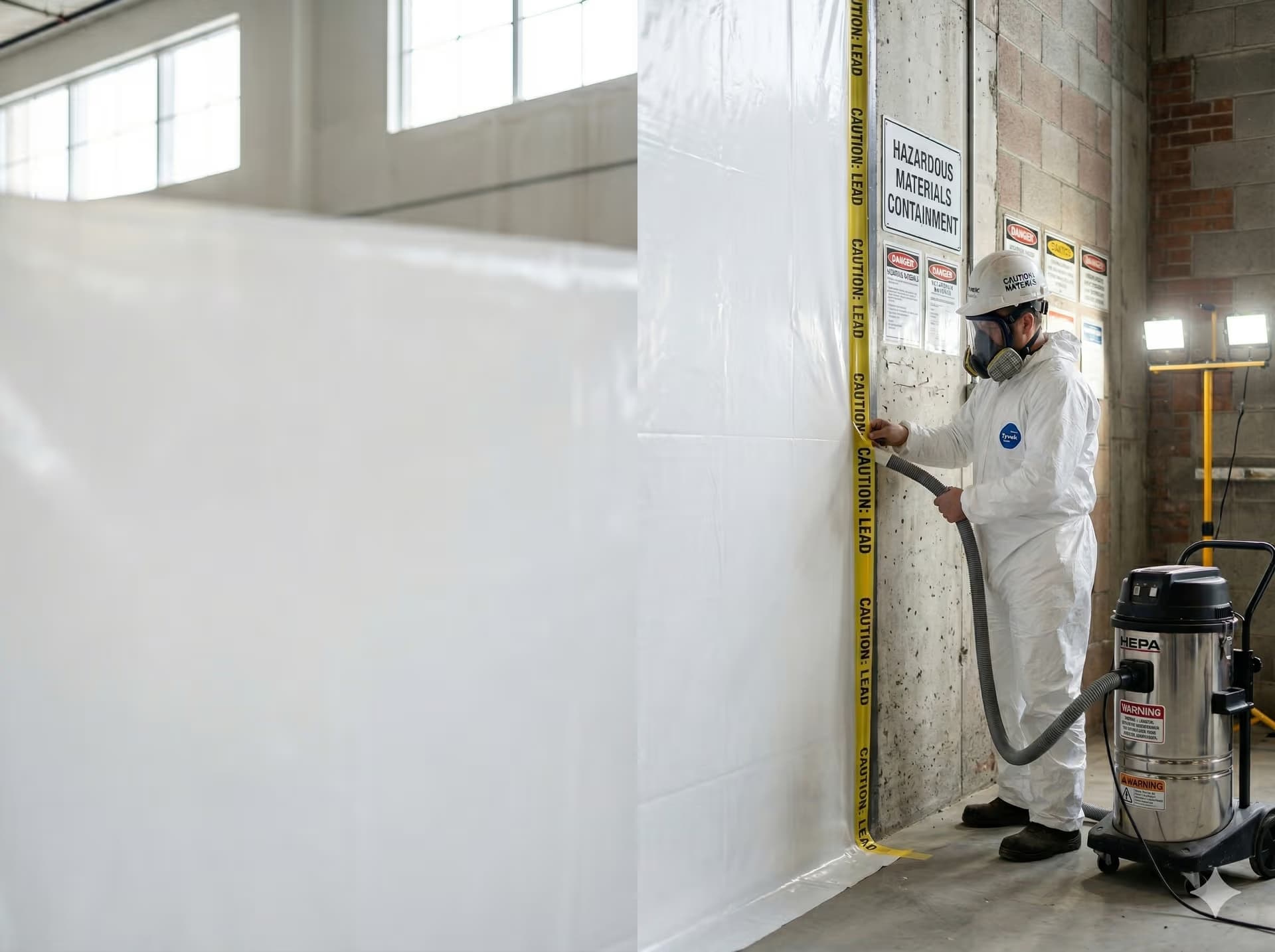
Hiring a licensed asbestos abatement contractor ensures work proceeds under full environmental containment. Technicians install negative air containment units equipped with commercial HEPA scrubbers, establishing air pressure differentials that prevent dangerous drift into unmanaged living zones.
Integrated Restoration and Environmental Care
Hazardous material management often intersects with other property emergencies. When unexpected water damage impacts vintage drywall or subfloors, professional teams perform synchronized flood restoration, mold remediation, and safe material extraction. Using thermal imaging and industrial psychrometric drying curves, specialists completely restore structural integrity while controlling all air quality hazards.
Frequently Asked Questions
How is asbestos testing for Calgary homes conducted?
A certified technician extracts localized bulk samples following Alberta OHS protocols. These samples undergo laboratory analysis using Polarized Light Microscopy (PLM) to accurately confirm fiber concentrations.
Can I remove asbestos-bearing popcorn ceilings myself?
DIY removal of asbestos ceiling textures is highly unsafe. Scraping without negative pressure containment spreads microscopic toxic dust into home ductwork and soft furnishings.
What should I do if I suspect asbestos after water damage?
Immediately halt clean-up efforts and isolate the affected zone. Contact professional restoration experts to inspect, sample, and contain materials before drying equipment is installed.