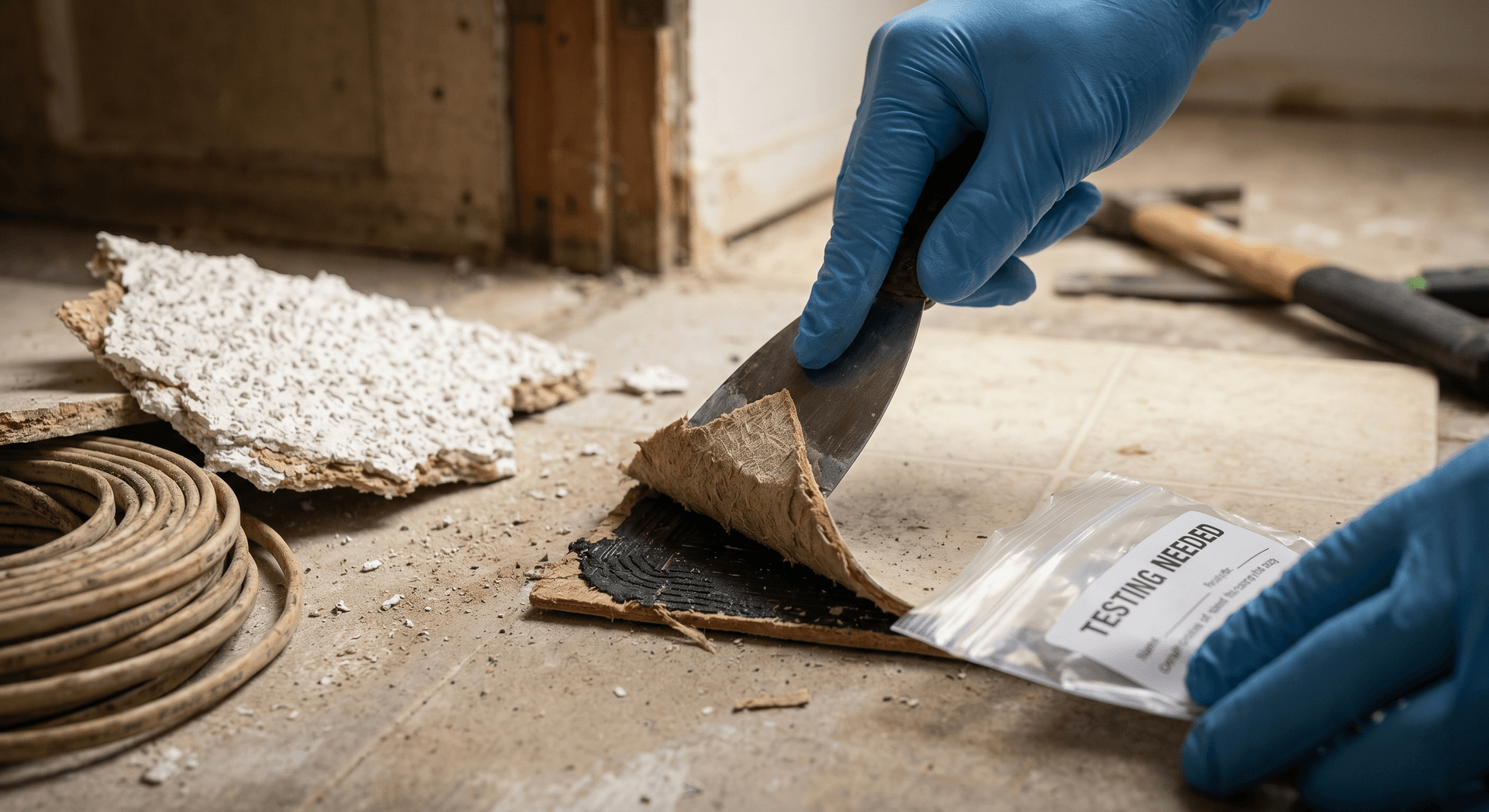
Is It Asbestos? 5 Common Household Materials That Might Surprise You
It is a common misconception that asbestos is only found in "fluffy" attic insulation or old industrial pipes. In reality, asbestos was the "miracle mineral" of the 20th century, prized for its heat resistance and tensile strength. This led manufacturers to include it in hundreds of everyday building materials.
If your home was built or renovated before the late 1980s, there is a high probability that asbestos is hiding in plain sight. Here are five materials that often catch homeowners off guard.
1. Vinyl Floor Tiles (and the Glue)
That retro 9x9-inch floor tile in your basement isn't just an aesthetic choice from the 60s—it’s a prime candidate for asbestos. It’s not just the tile, either; the black mastic (adhesive) used to glue them down often contains high concentrations of asbestos.
2. Popcorn Ceilings
The textured "cottage cheese" ceilings popular from the 1950s through the 1980s were often made using chrysotile asbestos. These ceilings are incredibly fragile—simply bumping a ladder against them can be enough to dislodge hazardous dust.
3. Window Putty and Glazing
Asbestos was frequently added to window glazing to help it withstand extreme temperature fluctuations. As window putty ages, it becomes brittle and cracks. When homeowners try to chip away old putty to replace a pane, they unknowingly create hazardous dust right at eye level.
4. Joint Compound (Drywall "Mud")
Even if your drywall sheets are "clean," the joint compound used to seal the seams and cover screws likely isn't. Sanding drywall smooth for painting is one of the most common ways homeowners accidentally contaminate their entire house.
5. Electrical Wiring Insulation
Old electrical panels and the cloth-like insulation wrapped around wiring in vintage homes often utilized asbestos for fireproofing. Moving or pulling these old wires can cause the brittle insulation to flake off instantly.
🛑 What Should You Do Now?
If you suspect one of these materials is in your home, follow these steps:
Stop Work Immediately: If you are mid-renovation, stop what you are doing.
Seal the Area: Tape a piece of plastic over the damaged area or close the door to that room.
Turn off the HVAC: Stop the air circulation so fibers don't travel through your ductwork.
Call a Professional: You cannot identify asbestos by looking at it. A certified inspector will use "wet sampling" to ensure the testing process doesn't contaminate your home.
The Golden Rule: Professional asbestos abatement is significantly cheaper than a lifetime of medical bills or the cost of decontaminating an entire house after a DIY mistake. Be smart, stay safe, and always test before you tear.